
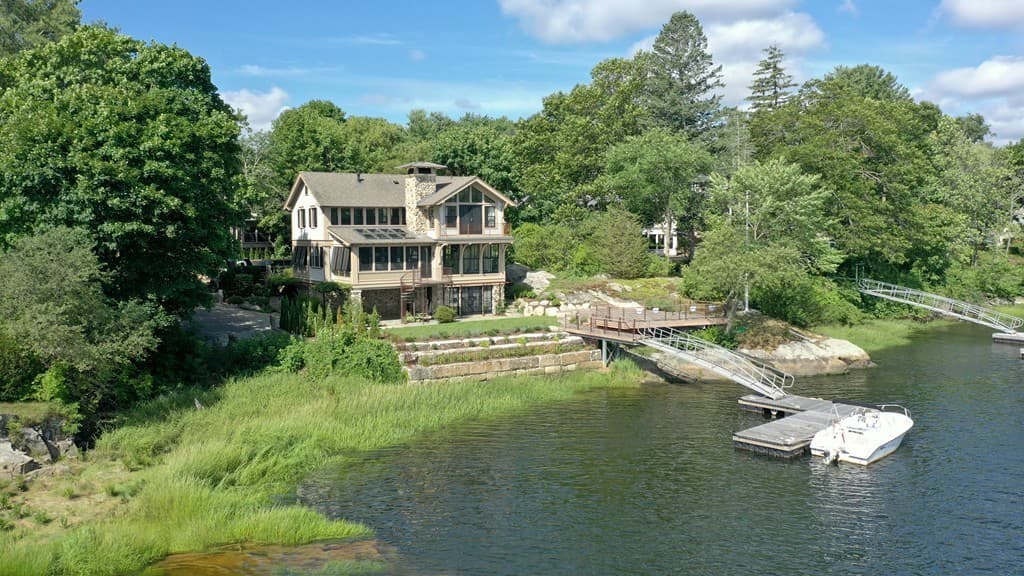
What Is an Accessory Dwelling Unit?
October 9, 2026
An accessory dwelling unit (ADU) is an independent, self-contained home on the same property as a primary house. It has its own sleeping area, bathroom, kitchen or kitchenette, and a private entrance.
Choose an ADU when you want a second, complete living unit for family or rental income; choose a simple addition when you only need more room.
We are Bentley's Real Estate in Greater Newburyport, Massachusetts, and ADU questions come up with our clients all the time. The first hurdle is usually vocabulary, since one space can go by half a dozen names.
What an ADU is called
Depending on where you live, an ADU might be called:
- In-law unit or in-law apartment
- Granny flat
- Backyard cottage or backyard home
- Casita
- Guest house
- Secondary unit or companion unit
What makes a space an ADU is function, and function also decides its shape. Case in point: a finished basement room with a bed is extra space.
Add a kitchen, bathroom and separate entrance, and it can be a secondary dwelling unit, as long as local rules and a permit recognize it.
The main types of ADUs
That shape falls into five common types of accessory dwelling units, and the right one depends on your lot, budget and need for separation.
| Type | What it is | Best fit | Tradeoff |
|---|---|---|---|
| Detached ADU | A separate structure, like a backyard cottage | Larger lots, privacy | Highest construction cost, utility runs, setbacks |
| Attached ADU | An addition built onto the primary home | Family close by | Shares a wall, changes the home's look |
| Interior or converted ADU | A converted basement, attic or spare room | Owners using existing space | Ceiling height, egress and fire safety codes |
| Garage conversion | A garage turned into a living unit | Homes with an underused garage | Lost parking, which some local rules require |
| Junior ADU (JADU) | A smaller unit, typically under 500 square feet, inside the existing home, which may share a bathroom | A simple family suite | Less independence |
Measure the real usable space before sketching a floor plan, because the square feet on paper rarely match what counts as living space.
Once the type is clear, the next question is what the unit is for.
Why homeowners build ADUs
Most homeowners we talk with want one of three things: housing family, earning rental income, or keeping the property flexible. Aging parents, adult children and caregivers all fit.
Rental income can help cover the mortgage and property taxes. And a permitted ADU can add value at resale.
| Goal | What to check first |
|---|---|
| Family housing | Accessibility, one-level living, a separate entrance |
| Rental income | Whether local rules allow renting, and any occupancy limits |
| Resale value | Whether the unit is permitted and documented |
Picture who will live in the unit ten years from now. A space for an aging parent can later work as a rental, if the design and permits allow it.
Each of those goals comes with a cost.
Pros and cons of an ADU
Weighed side by side, an ADU adds space, income and flexibility, plus cost, permit work and less privacy.
Pros
- Rental income potential from a separate unit
- Housing for family members, close by but independent
- Flexibility in how you use the property
- Possible increase in property value when the unit is permitted
Cons
- Construction, utility and design costs
- Permitting and zoning steps take time
- Less privacy and more activity on the lot
- Property taxes may rise with the assessed value
Before you build, ask a tax professional how an ADU could change your property tax assessment, and ask your lender about financing. Your town is the bigger variable.
Zoning, permits and local rules
Your town or county sets ADU rules. That is, local zoning, building codes and planning department standards decide where a unit is allowed, its size, setbacks, parking and rental use.
Many states have streamlined rules to expand housing, but the local code controls the details.
| Rule area | What local codes often regulate |
|---|---|
| Zoning | Which residential areas allow an ADU |
| Size | Square feet limits for the unit |
| Setbacks | How far the structure sits from lot lines |
| Parking | Whether the property needs an added space |
| Utilities | Water, sewer or septic capacity |
| Occupancy | Owner occupancy and rental use |
An ADU needs official local building and zoning permits to be legally recognized, and specific requirements vary.
In Massachusetts, rules can differ from one city or town to the next, so contact the local building department or planning office before you design anything. And that permit history stays with the property, which is why it matters long after construction ends.
ADUs when you buy or sell a home in Greater Newburyport
When a home with an ADU goes on the market years later, buyers ask about it. For buyers, an in-law unit can be a real advantage, as long as you ask whether it was built with a permit and how the town classifies it.
For sellers, a permitted ADU gives buyers confidence, while an unpermitted unit raises questions an attorney or lender may need answered.
Bentley's Real Estate is the #1 brokerage in Greater Newburyport by market share seven years running. Our 60+ agents help buyers judge whether a home with an ADU fits their plans, and help sellers present that space honestly.
Weighing an ADU
Weighing an ADU, or a home with one? Call us at (978) 572-1200.
Keep Reading
Suggested Blogs

New Homeowner
Your Complete Guide to Unpacking After Moving to the North Shore, MA
Moving to Newburyport, Amesbury, or anywhere on Massachusetts' North Shore? Our 7-step unpacking guide helps new homeowners settle in quickly and stress-free.

General
National Housing Headwinds vs. Greater Newburyport's Market Strength
When national housing analysts sound the alarm, local expertise becomes essential — here's how Greater Newburyport compares to national trends.

Buyer
Massachusetts Home Inspection Red Flags
Don't let hidden problems turn your dream home into a nightmare. Know what to look for in the Bay State — especially in Greater Newburyport's unique coastal market.
Ready to Make Your Next Move?
Our proven process and local expertise are here to help you navigate every step of your real estate journey.